Friday, November 13, 2020

Bond's Best


GoldenEye

1995

D: Martin Campbell

**********

Pros: Characterization, Action, Gimmicks, Music, Cast

Cons: No Bond Car Chase, Some Silly Moments


            I know that my hot Xennial takes on the Bond franchise may be surprising, but I’m going to say this right now: GoldenEye is the best Bond movie, and the game is better.  It does the best job of providing solid characterization while maintaining the gonzo elements that are the franchise’s strongest trait.  The problem is that Bond was never the most compelling or well-developed character, and the best strategy is to deconstruct the character to some extent.  License to Kill was an early attempt at this, but it was a pretty bland movie.  In fact, I believe that most of the character’s popularity came from Sean Connery’s charisma (requiescat in pace), and this late, great actor seemed to agree with me.  It also doesn’t help that most of the earlier Bond movies had dated actions scenes and terrible pacing. 

           As for characterization, Bond is relatively well-developed.  He’s still a suave action hero, but the movie acknowledges his dark side.  This movie displays the potential consequences of his profession and the toll it takes.  Bond hardens himself against any feelings of remorse when a former comrade goes rogue and must be defeated.  Pierce Brosnan is perfect in the role.  He’s believable as an action hero, at least in his earlier Bond films.  His Bond has a charm that belies  the focus of a cold-blooded killer.  I feel obligated to count Connery as the best Bond, but I like Brosnan better.  Then again, many Boomers will just shamelessly go out and say Moore was the best Bond while I’m here being squeamish about it.

         GoldenEye also features one the franchise’s best villains: Alec Trevelyan (Sean Bean).  A true nemesis to Bond, he betrays England and becomes a terrorist bent to hold the world hostage with the eponymous Russian killsat.  His past as a 00 also gives him a skill set that matches 007's.  Assuming Bond would compromise a mission to help him in a bind, Trevelyan becomes bitter and vengeful toward our hero.  His dedication to the self contrasts with Bond’s loyalty to the greater good, further reinforcing him as a foil.  Still, Bond admits personal motivations in killing him in cold blood, reflecting that on some level there’s commonality between them.  It’s Trevelyan’s lack of principle that enrages Bond, while it’s Bond’s lack of sociability that engrages Trevelyan.  I can’t help but see that in a certain fandom.  In keeping with the franchise’s tradition of basing villains on celebrities, he is named after a British censor who was a constant thorn in EON’s side.  This movie, along with Patriot Games, ensured I was already of fan of Sean Bean before Lord of the Rings.  As a macrocosm of this shifting alliances, the movie takes place in the aftermath of the Cold War, focusing on Russia’s adjustment to the Fall of Communism.  The cold open takes place during the Cold War, when Trevelyan and Bond were still friends. 

         On the subject of Bond girls, Natalya Simonova (Izabella Scorupco) is the best of the bunch.  While most of these are at best love interests and at worst objects, Natalya is practically a deuteragonist, having her own independent conflict and arc.  The only other Bond girl that comes close is Melina from For Your Eyes Only, which happens to one of the less watchable entries in the series.  At one point she even calls out Bond for his personal flaws and coldness.  Unfortunately, despite this they have an obligatory sex-tease at the end.  As much as I love the video game, I hate how it did our heroine dirty, reducing her to an idiot for no apparent reason.  In the movie, Natalya’s her connection to the plot was working on the Russian killsat project before Trevelyan’s terrorist organization slaughtered her friends and colleagues to steal it.  So what does she do when she finally meets Boris Grishenko (Alan Cumming), a co-worker who betrayed her, her country, and her friends to help a mass-murderous organization?  She runs up to him and starts absolutely whaling on him while he cowers helplessly.  Even Trevelyan just lets her do it for a while.  On the other hand, video game Natalya refuses to help you save the world if you just scare Boris.           

          Another credit to the movie is Moneypenny (Samantha Bond).  Her dynamic with Bond is underrated.  They have good chemistry as friends while suggesting the idea that they might be potential soulmates.  It’s also meaningful that Bond genuinely treats her as a true equal because they don’t automatically have sex.  It was one of those ways a promiscuous male character can somehow be acceptable in the conservative culture that produced him.  Unfortunately, Die Another Day made it stupid.

         GoldenEye features a solid cast of memorable characters.  Famke Janssen plays Xenia Onatopp, an evil henchwoman whose signature move is suffocating men with her legs when she has sex with them; she clearly gets sexually aroused when shooting people.  Gottfried John plays a traitorous Russian officer.  Joe Don Baker is a jolly CIA agent who aids Bond.  Robbie Coltrane plays a former KGB foe whose help Bond must seek.  Desmond Llewelyn reprises his role as Q, and Judi Dench appears as more modernized interpretation of M.  Minnie Driver also has a small role.

         The action in the movie is a huge step up from previous works in the series.  Great stunts (including Wayne Michaels’ dam bungee jump) and choreography, all in peak 90’s practical effects.  The gunfights are visceral with extra’s screaming in pain when they get shot.  I’m also happy that they used minuatures for MiG-29’s instead of trying to pass off F-5’s as Russian planes (although it does use an obscure Swiss-American plane in the first scene).  

         While taking its characters more seriously, the movie refreshingly uses gadgets.  I like the Craig movies, but think its shying away from this was throwing the baby out with the bathwater.  I mean, this is what’s cool about the Bond franchise.  The classic DB5 gets an appearance as Bond’s default car before he’s introduced to his new Z3.  Unfortunately the car’s a bit of a letdown, and this is my biggest complaint about the moviie.  In a particularly egregious example of product placement, BMW lent a pre-production sales prototype they were reluctant to mess up.  Therefore, despite have a respectable weapons set, the Z3 wasn’t used in an action scene, and, no, a tank is not cooler than a Bond car.  Not using mockups must be a trademark for Campbell, who also apparently had no choice but to total twelve Aston Martins for a crash in Casino Royale.  Then again I wouldn’t be surprised that mocking up a car would cost more than a T-54.  I also believe that Bond cars should come in neutral colors, so it doesn’t help that this one is blue.

          The comic relief is pretty good, with witty dialogue instead of bad double entendres.  However it does have some silly moments.  The Q scene has some ill-advised slapstick in the background.  A scene in which Xenio takes steals someone’s ID while flashing it to the 4th Wall is a bit camp.  Also, Bond is confounded by men in ghillie suits two feet away from him at one moment.

         The Intro theme is also my favorite in the franchise by Tina Turner.  Its visual aspect was also a watershed moment: all the Bond intros up to this one look the same with their black backrounds, but this one started a trend of each one’s having its own distinctive look.  Eric Serra’s score is very memorable, providing the movie with a unique atmosphere.  Unfortunately it does sound goofy at times.  

         I admit this movie has special nostalgic significance to me.  I came of age in the gap between this and License to Kill, which was the longest since they started making Bond films.  In fact, I knew of James Bond, Jr. before I even heard of James Bond.  This may be the first Bond movie I’ve watched, but it still holds up.  I’ve noticed that Martin Campbell seems to have a specific talent for this franchise, having made this and Casino Royale.  In fact the irony I prefer Disney’s 1950’s Zorro over his movie adaptations. 

Tuesday, November 10, 2020

Primal Pixar


The Good Dinosaur

2015

D: Peter Sohn

**********

Pros: Design, Animation, Suspenseful tone

Cons: Questionable Villain Death


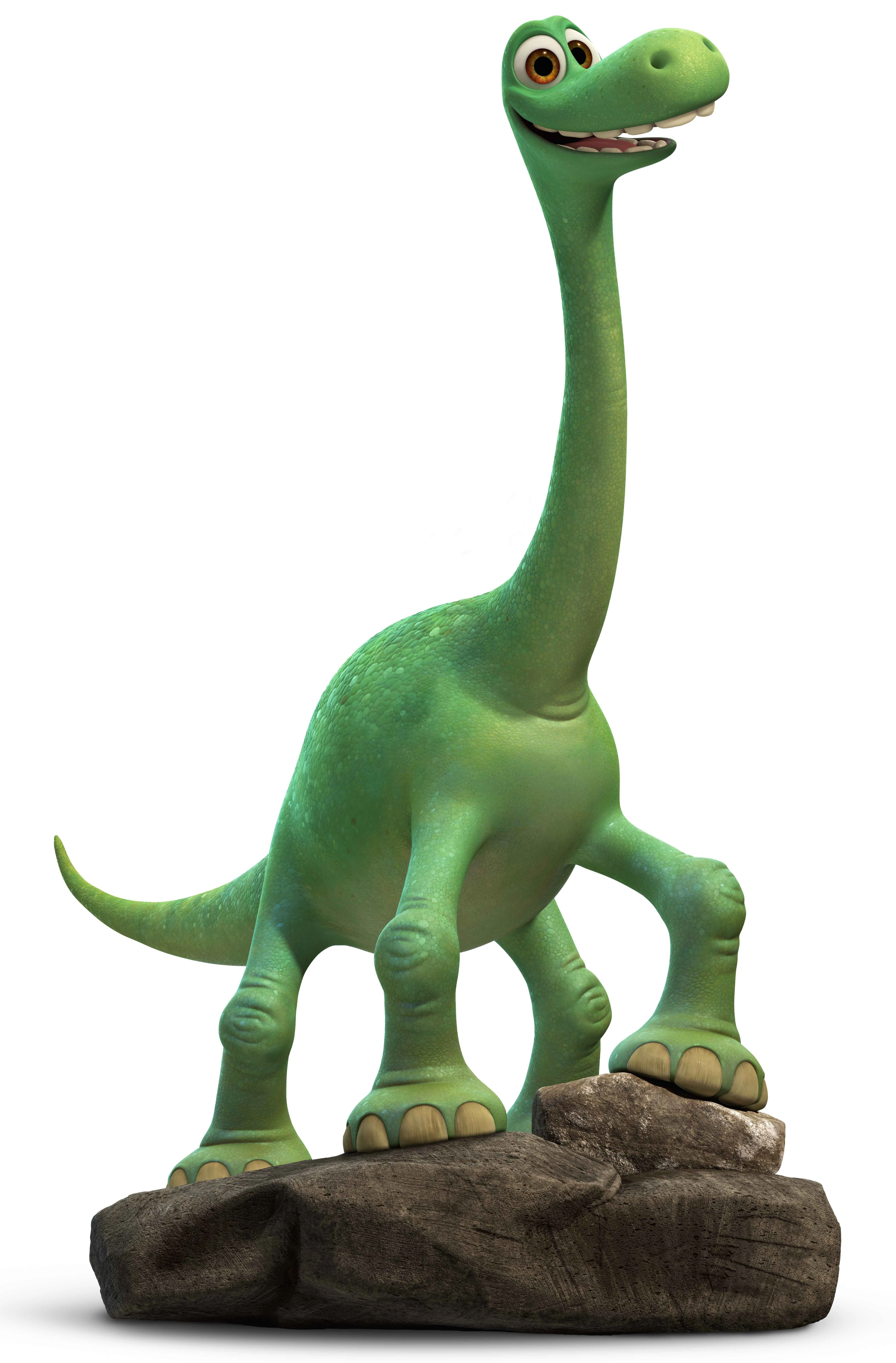
         The Good Dinosaur is cited as one of Pixar’s weakest films.  However, it does have its strengths in design, and the suspenseful premise.  It departs from the company's usual approach of creative high concept premises, but I sometimes find the simple Don Bluth way of “earn your happy ending” to be refreshing.  For this reason, among others, I'm compelled to defend this film.

        The story takes place in an alternate reality in which the asteroid that killed the dinosaurs was diverted, allowing them to evolve human-level sapience.  A family of Brontosauruses (yes, we can use the term, even though it’s probably moot at this time in-universe), has a farm.  The mother (Frances McDormand) and father (Steven Wright) have three children: the tough Buck (Marcus Scribbner) and Libby (Maleah Padilla) and the gawky, shy Arlo (Raymond Ochoa).  Arlo’s design is lovably cute and goofy, while emphasizing his vulnerability and isolation from his family.  I absolutely love it, and it makes me wonder what people see in the Minions.  Characters convey emotions well, except for the moments when Arlo is lethally furious at Spot after his father's death, which come off too comical. The backgrounds are beautifully rendered; many people think it clashes with the cartoony characters, but it works.  Despite the photorealism of the scenery, the movie transitions well to stylized monochrome during some darker scenes.  I also like the design of the Velociraptors.  Most shy away from the feathered designs, but the movie takes the crazy meth-head look and uses it to its advantage.  I'm not sure the comparison was accidental, considering how easily one loses a tooth in battle and how another one is scratching herself compulsively.  The score by Mychael and Jeff Danna is effectively emotional and occasionally ominous.  It fits the movie quite well. 

       Near the beginning of the plot, the father dies, and the Arlo's crippling guilt is compounded by the family’s inability to manage the farm sufficiently without him.  Thankfully his family doesn't abuse him over this, but that would have been believable.  Granted it was the father's fault, even though he realized it at the last second.  In a misguided attempt to help Arlo overcome his fears, he tasks him with killing the "critter" who's raiding their food.  That may be an important duty on a farm, but it's unfair to be so abrupt.  When Arlo spares the animal, a human child named Spot (Jack Bright), Poppa angrily leads head to the river in a storm, causing his own death.  Eventually Arlo is lost once again under similar circumstances, and befriend Spot in the process.  The movie does a great job making you feel sympathetic for Arlo for all his struggles and injuries, but this kid sustains so much blunt head trauma he should have been dead numerous times over.  Still, the pathos is well-executed, and the direction brings it out well.  Our hero overcomes crippling fear and risks his life to protect Spot from the villains.  Besides, I'm a real sucker for reunion scenes.

        On the first viewing, the villains, a gang of pterodactyls led by Thunderclap (Steve Zahn), seem far too sympathetic.  Essentially a group of half-starved homeless people, they're desperation is understandable.  However, their actions are truly antagonistic.  They introduce themselves as friends to Arlo, but doggedly try to take Spot from him for food.  They fight each other for food.  Their attempt to steal a "pet" that’s already spoken for is ambiguous.  What makes Arlo's actions right is that Spot, despite his ambiguous anthropomorphism (yes, I know he's the human, you have to acknowledge a movie's internal logic, though) displays evidence of personhood.  He goes out of his way to help Arlo even when the latter attempts to kill him to avenge his father, which may even be motivated by guilt.  He also understands abstract concepts enough Arlo to communicate with him despite the language barrier.  The movie's biggest problem is the disturbingly cold-blooded way by which Thunderclap is killed.  When he is wounded and fleeing in panic, Arlo throws a branch at him with absurd accuracy, causing him to fall into the rapids and drown.  And people complain about Superman’s obviously justifiable killing of Zod in Man of Steel.  The cult-like beliefs of this gang also, whether intentionally or not, effectively indict forms of faith that emphasize amoral justification. 

         Despite this, I found The Good Dinosaur enjoyable, and it gets a bad rap.  It does a great job with suspense and sentiment, and that's what many movies are for.  The cast also includes John Ratzenberger, director Peter Sohn. and Dave Boat.  Sam Elliot, Anna Paquin, and A.J. Buckley star as a group of friendly T-Rexes who herd “longhorn” dinosaurs and provide a proportion of the movie's humor.  I was also impressed by the the lack of pervasive comic relief, let alone bad stuff.  That's impressive in the MCU era.  


QUOTES


BUTCH: I got a job for you.

ARLO: I’m not really good at jobs…

BUTCH: I need you to keep on the dodge and sidle up the loblolly, past them horn-heads, just hootin’ and hollerin’ and score off them rustlers.  We’ll cut dirt and get the bulge on’em.

ARLO: What?

RAMSEY: He just wants you to get on that rock and scream.

ARLO: Uh, but who’s out there?

BUTCH: They’ll come right at ya.  You hold your ground.  Don’t move.

ARLO: Don’t move?  But what if they have claws and big teeth?

BUTCH: Don’t overthink it.

Thursday, November 5, 2020

Flying Too Close to the Sun


RoboCop 2

1990

D: Irvin Kershner

**********

Pros: Visuals, Design, Violence, Writing has its moments

Cons: Heavy-handed comedic tone, No original theme song


         RoboCop is a classic satire.  Paul Verhoeven was able to strike a very difficult balance that shined light upon the flaws of capitalism while still maintaining realistic, sympathetic characterizations.  As a result, it’s easy for it to be mistaken for an earnest work while not veering too far into being a truly confused attempt at parody.  Its depiction of the corporate power is even more apparent after one has evolved to recognize it as a problem.  After being raised to defend unfettered capitalism, it’s particularly embarrassing when you’ve had to have it weaponized against you to learn your lesson.  Some things must be run with representation, not through the faux “choice” of a commercial monopoly.

         Unfortunately, RoboCop 2 lacks the aforementioned balance.  Verhoeven’s style is hard to recreate, even for the director of my favorite movie.  The humor in the movie is far too heavy-handed and it often turns into a sort of live-action cartoon.  The sound effects and music in this scene, for example, are decidedly over-the-top (although the part where the engineer cringingly nurses his bandaged arm in reaction to seeing it get shot on video is funny).  At one point there’s even slide-whistle as two characters take a fall.  All this might have been perfectly fine camp had it not been done under the expectations set by the first film.  Even when I was a kid I thought the little league team gang was too much.

           The buffoonery is not simply limited to style.  The commentary is also overdone, being more akin to a partisan political cartoon.  In an early scene a news channel reports on the environmentalists’ issue with a nuclear accident with the anchors saying something like, “Of course, they would say that,” critiquing the clear bias our media apparently has in favor of nuclear power.  I’ve noticed that one of the perks of running the media is the unlimited license to use the media to pretend you don’t run the media.  Not to say the liberal satire’s the only problem; when RoboCop (Peter Weller) is repaired after being mutilated by a gang, OCP psychologist Juliette Faxx (Belinda Bauer) suggests that his programming directives be expanded to include a plethora of bad 80/90’s jokes about political correctness.  The resultant restraints leave him unable to do his job until he short-circuits himself on purpose to delete them.  The in-universe commercials are also cringe-inducingly unsubtle.

         This results in the most apparent character derailment of the movie: the Old Man (Dan O’Herlihy).  In the first movie, he’s depicted as an affable person, not necessarily good, but not necessarily malicious.  He seemed to mean well without realizing how corrupt and damaging his empire really was.  Turning him into a mustache-twirling caricature of a villain not only undermined the movie’s characterization but also its themes.  It was far more of an effective indictment of runaway capitalism in the first movie to have him be seemingly innocent.  At the end of the debacle, he even utters the cartoonish phrase “we need to get our best people to spin this.”  He’s even shown to be a dirty old man on top of that.  As if the caricature isn’t enough, OCP’s headquarters are flanked with Nazi-style banners.

Above: subtlety

         Not to say the movie is entirely without decent commentary.  The reliable presence of Johnson (Felton Perry) in the movie series is a statement on the ability of mediocre but ambitious people to maintain power in corporate in political systems.  In this movie his attempts to recreate the success of RoboCop end in failure, and he regains his position by convincing the old man to throw Dr. Faxx under the bus after the RoboCop 2 debacle.  There’s also a nice moment where someone absurdly asserts that people could buy stock in OCP’s all-powerful corporate monopoly, and “what could be more democratic than that?”

         Another plus is the depiction of Murphy/RoboCop, at least in the first act.  He’s seen watching his wife (Angie Bolling) from afar, and when she notices she files a lawsuit for harassment.  Realizing that he must eventually let her go and allow her to have a normal life, he tells her a noble lie: Murphy is dead, and there is nothing left of him, sacrificing his family.  RoboCop also feels some paternal reluctance to kill Hob (Gabriel Damon), a child who’s also a violent gang member.  When the latter is eventually killed, he holds the boy’s hand until he’s gone.  I remember watching a TV version in which Hob succumbs to Chuck Cunningham Syndrome, despite the presence of ultraviolence in the edit).  It was distracting, but it makes sense that the kids would remove himself from the entire situation after seeing RoboCop 2 in action.  I also like the theory that Murphy’s staunch Catholicism helped him psychologically survive a forced transition into a cyborg.  There is something to the doctrine of self-denial that would help with that.  However, this theory was also floated by the character who thought that putting the brain of a violent, drug-addicted crime lord into a weaponized robot body was a good idea.  Frank Miller did write the story, so this would be consistent with his inconsistent depiction of Roman Catholicism.   

        The movie is also remarkably ultraviolent, even outdoing the first entry.  This is one instance where it does justice.  An appropriately twisted moment is when Cain’s (Tom Noonan) brain is excised from the body, it’s kept in a water tank with intact eyes, being forced to watch as techs mess around with what’s left of the face.  The most triumphant moment of comically over-the-top violence is when RoboCop kills RoboCain by taking its brain (which is apparently connected via wi-fi) out of the shell, and destroys it as the other cyborg watches in horror, throwing the jar against the ground, scattering the brains everywhere while RoboCain is STILL SOMEHOW CONSCIOUS until RoboCop melodramatically BASHES THE REMAINING BRAINS WITH HIS FIST. 

         The movie’s visuals are enhanced by Phil Tippett’s go-motion sequences.  I particularly love the monstrous design of RoboCain.  The retractable LCD screen on the robot body was also a novel use of CGI.  Leonard Rosenman’s score is pleasantly florid, but the movie tragically lacks the iconic Basil Poledouris theme.  There’s an enjoyable rock song in the soundtrack by Babylon AD.  Nancy Allen returns as Officer Lewis.

         RoboCop 2 is actually a fun movie that I cite as a guilt pleasure, but it has some simplistic satire that does not do justice to the original.  Even the remake is at least a decent self-contained work.  I intended to review it in time for its 30th anniversary, but I forgot.  


QUOTES 


ELLEN MURPHY: Alex? Don’t you know me?  Don’t you remember me? Alex, it doesn’t matter what they’ve done to you, I…

ROBOCOP: Touch me.

ELLEN MURPHY: [touches his lips] It’s cold.

ROBOCOP: They made this to honor him.

ELLEN MURPHY: No, I…

ROBOCOP: Your husband is dead.  I don’t know you.

[RoboCop watches sadly as she leaves crying]


JOHNSON: Uh, sir, what if this was all the work of one individual person?  A woman who had her own agenda that wasn’t in sync with the goals of our company?

THE OLD MAN: Well…that usually works. 

JOHNSON: A woman who was not a team player, who violated our trust? (Dr. Faxx)

THE OLD MAN: Well, we’ll need some evidence to support that.

HOLZGANG: Sir, whether it exists or not, I know I can find it.  

JOHNSON: She did choose the brain, sir.        

Friday, October 30, 2020

My Favorite Movie


Star Wars: Episode V – The Empire Strikes Back
1980

D: Irvin Kershner

**********

Pros: Story, Visuals, Characterization, Themes, Score

Cons: Bad Special Edition Changes


   Considering how well respected Empire Strikes Back is, it may seem unnecessary to defend it further, but I believe I have thoughts to contribute.  I will point out that if you have not seen this movie or somehow do not know how it ends, you should stop reading and watch the first two Star Wars movies.  I’ve never believed that there’s a statute of limitations for spoilers.

      The movie subverts the expectations (in a good way) by beginning with the Rebels’ being tracked down to their secret base and defeated in a humiliating battle.  As they desperately flee, our heroes are split into two groups that are separate from the Alliance. At the behest of Obi-Wan Kenobi (Alec Guinness), Luke Skywalker (Mark Hamill) travels to Dagobah with R2-D2 (Kenny Baker) to continue his training under Yoda (an excellent puppet voiced by Frank Oz).  Meanwhile Han Solo (Harrison Ford), Princess Leia (Carrie Fisher), C-3PO (Anthony Daniels), and Chewbacca (Peter Mayhew) are stranded in the sector by a faulty hyperdrive as Darth Vader (David Prowse, voiced by James Earl Jones) obsessively pursues them.  He eventually captures them and tortures Han in order to lure Luke into a fight.  Luke is injured in the altercation and traumatically learns that the dark lord is his father.  It’s a bold twist that has inspired some uninspired wannabes.  The closest thing to something that predated it in pop culture is Baron Harkonnen’s being Paul’s grandfather in Dune, and it would be absurd to pretend that plays out the same way.  All in all, I would recommend showing this movie to someone early enough so that the twist is not ruined by all the imitations beforehand.

I’ve heard people complain that it was “cliched.”

       Throughout the movie, Vader executes a few Imperial officers for incompetence, thus establishing a reputation for being a bit crazy.  This has unfortunately been taken to the point of parody, and I have a dissenting opinion on this.  While Vader may be an evil, murderous fascist, he’s not a fully irrational psycho, and I think his unhinged behavior in this movie has to do with his desperation to reunite with his son.  He’s beside himself and still manages to steamroll everyone.  In the other movies he doesn’t kill out of pure impulse.  In ANH he strangles a rebel for lying to him during an interrogation and almost does so to Admiral Motti, who was really asking for it.  In ROTJ it’s implied that he might have murdered some people at the Emperor’s behest to speed up the Death Star’s construction.  On the other hand, he comes off as tolerant toward his subordinates most of the time, welcomes their informed dissent, and occasionally even compliments them just for doing their jobs.  He’s still evil, of course, but he’s simply not that cartoonish.      

        The themes of this movie are great.  Luke’s headstrong nature causes him to face Vader prematurely, and the good guys have to retreat with their tails between the legs.  Han is captured and left to an uncertain fate at the end of the movie.  Lando Calrissian (Billy Dee Williams) is a foil for Han who is split between his responsibility to his city and standing up for his friends against the villains.  He eventually finds out why you shouldn’t make a deal with the Devil, even if the intentions are good.  There’s well-executed romance in this entry, subverting the puppy-love tease between Luke and Leia, with Han’s playing the sensitive role toward the Princess, who is so dedicated a fighter he must pull her out of combat.  Yoda is a compelling character, a mysterious monk with an implied past of tragedy; developing him in the prequels really sullied that mystique.  Moreover, the idea that Ben and Yoda hid the truth from Luke provides a good lesson in the life: make sure the next generation knows the whole truth.  There’s an understandable assumption that all one’s children need to know is the present significance of a political conflict.  But knowing the history helps one understand how it can be fought.  More importantly, hiding the truth can set the young up for disillusionment to the point of feeling betrayed.  This can make them reject noble beliefs.  It’s not a logical reaction, but it’s a common one.

         In fact, not enough works show protagonists' actually getting corrupted by this epiphany. So it's actually fitting that Revenge of the Sith and TCW show this happening to Anakin.  His disillusionment with the Jedi's lies and corruption puts him on the path to the Dark Side.  This makes Vader a good foil for Luke and explains why the latter might be the one who can redeem him: because on some level he understands why Vader fell.

         Empire Strikes Back maintains the franchise’s balance between fantasy and grit while expanding its boundaries.  We have an ice planet, a floating city, and a final confrontation in a literally hellish industrial environment juxtaposed with web-like scaffolding.  Mythological settings with a sci-fi explanation In contrast more recent Star Wars works have downplayed the former.  Even the AT-AT’s monstrous appearance is just justified by the Empire’s fascination with gigantism while being powerful enough to prioritize terror over impeccable strategy.  The special effects and cinematography enhance the atmosphere, as well as John Williams’ excellent score. 

         As with most of the Star Wars movies, it has its share of questionable military tactics (I for one would love to read the naval case study on those two Star Destroyers that somehow managed to run right the hell into each other).  It’s odd how the Rebels didn’t wipe out the AT-AT’s within a minute after it was discovered all you had to do was shoot them in the neck (real cold move there by the way, Wedge).  I’d say the difference between a nitpick and truly bad writing is whether or not the plot is dependent on the flaws.  The only thing that matters is that the Rebels lose a battle in the first act, and these things I described are easily fixed details.  This isn’t exactly TLJ (and to a lesser extent, ROTJ), in which the entire conflict is based on tactical nonsense.  There still could be a bit of an issue with Vader’s merely having the Falcon’s hyperdrive deactivated after allowing Lando’s men to repair it.  I suppose it could be a covert attempt to lure the heroes back to the ship in case they escape.

        There’s another alleged flaw in regards to the movie’s timeframe.  Luke had to have spent a substantial amount of time on Dagobah to receive any meaningful training from Yoda.  However, when Han & Co. lose the Imperial fleet, Han says of traveling to Bespin, “It’s a long way, but I think we can make it,” implying that the trek would be long enough to normally justify lightspeed.  It could have been months.  This also explains how the Empire beat them to the punch once they got word of their intent. 

         This movie got off relatively easy in the Special Editions, getting fewer moments of bad CGI with the exception of some establishing shots of Bespin.  However, many cite a couple bad changes as good ones, and I’m going to have to set the record straight.  First, the Wampa scene.  People don’t seem to realize that the reason it was suspenseful is because you didn’t know where the Wampa was in relation to Luke.  The change was justified so we’d see “what a horrible monster” it is, but was just simply sitting there eating…and it actually looked kinda cute?  Like a Bichon Frise, almost.  The other “improvement” was the Emperor, a great example of prioritizing blandly literalist logic over aesthetic.  Yes, of course it does look more like the Palpatine in other works, but the original version was done more artfully.  There was a sense of mystery with the use of shadows and everything.  They even superimposed a chimpanzee's eyes over the characters’ for an intentional Uncanny Valley effect.  It also doesn’t help that the usually wonderful Ian McDiarmid appears to have been drugged for this take.  This is also troubling since this would be the most famous role from Marjorie Eaton, with Clive Revill as the voice.  I certainly don’t approve of memory-holing the contribution of two actors and an anonymous chimp to my favorite movie.  I won't stand for it.  

     The same adherence to logistics also informed the re-dubbing of Boba Fett (Jeremy Bulloch).  Jason Wingreen’s original voice was very fitting, and I always found it amusing how, when Vader told him not to use disintegrators, he sounded like teenager who was just asked to take the garbage out.  Temuera Morrison’ voice supposedly adds continuity to the prequels, but it doesn’t make sense.  You generally get your accent from your friends, not your parents, and Boba has spent much time away from Jango.  In fact, in actually makes even less sense for the clones to have Jango’s accent.   The one special edition change I like is the CG outdoor scenery added to the Bespin hallways, which breaks up the bland set design of that scene.  I like the shot of Slave I’s landing pad as the heroes approach it.

          This movie made Star Wars a franchise.  It proved that it had legs and potential as a universe.  The closest thing I have to a complaint is 3PO’s being annoying dead weight, but this is justified by his role as the Bard and comes in handy in Return of the Jedi.  The movie also stars Denis Lawson, Julian Glover, Kenneth Colley, Michael Sheard, and John Ratzenberger, with Kathryn Mullen, David Barclay, Wendy Froud, Deep Roy as puppeteers.

Tuesday, September 1, 2020

A Simple Man Making His Way in the Galaxy


The Mandalorian

2019-

**********

Pros: Cinematography, Special Effects, Potential, Release Model

Cons: Derivative Premise, Formulaic Episodes, Fanservice Dependent


         While Disney’s stewardship of Star Wars has been…underwhelming, I was a bit excited to check out Disney+ and The Mandalorian.  Admittedly it may have not been for the best reasons.  After all, the premise simply focused on what seemed to be a Boba Fett-like character who wasn’t actually Boba Fett, so I was a bit skeptical.  And then I heard that they were going to use practical models for the ships like the original trilogy did.


 Those effects are truly impressive.  I’ve always had a nostalgic charm for imperfect practical effects, but nowadays it’s flawlessly convincing with less risk of aging than CGI.  I even like the look of the Razor Crest, which seems similar to the LAAT/i but with a cleaner design.  The production quality is impressive for a show, making it look better than most movies.  Greig Fraser’s cinematography is excellent, and I think he may very well be the runner-up to Roger Deakins.  The show does a great job of capturing the gritty atmosphere that defines the franchise.

         The series also has a very effective release model.  Disney is one of the few companies whose streaming site possesses enough content to justify a subscription, and individual episodes of The Mandalorian are wisely released weekly during a season’s run.  This actually helps foster a shared pop cultural experience that’s rare nowadays.

        Of course, these are pretty superficial points of praise, so now to the story, which is pretty derivative.  It’s a typical plot about loner who ends up defying his superiors to protect a small child, incurring the ire of the whole world.  Shortly after the defeat of the Empire, The Mandalorian (Pedro Pascal) receives a news of a high-stakes job from Bounty Hunter’s Guild head Greef Karga (Carl Weathers).  Desperate for something more lucrative than the typical bail-jumper, he agrees to a job from a renegade Imperial official (Werner Herzog) only to find out that his quarry is an infant Yoda.  After turning the child in for a payment of enough beskar to construct a new suit, he decides to go back and rescue the kid from vivisection.  It’s not the first time Disney taught us that making a deal with the Devil would turn out ok because you can just screw him out of his end.  He goes on the run when the entire Bounty Hunter’s guild declares war on him.

       So far, most of the episodes are blatant, formulaic filler, often fueled by excessive fanservice.  There’s even one episode that joins the plethora of Seven Samurai rip-offs.  The bulk of the season involves his hiding from the Guild with the Child, but that time could have been better dedicated to tracking down the location of the infant.  Instead, the series features this absurd device that magically knows wherever a bounty is in the galaxy.  This is a shame because detective work is interesting and fun to watch, but unfortunately requires research and imagination to write.  Fortunately the final two episodes bring the thrills. 

       The series gives credence to the idea that people supported the Empire out of a desire for order.  There's even one direct example of things going to chaos as a direct result of its fall.  I think it might be a retroactive attempt to make the First Order more believable.

       The cast is mostly solid.  Mando himself is a likable enough stoic loner, but not that interesting Werner Herzog is enjoyable, but he’s sadly killed off near the end of the season by bigger bad Moff Gideon (Giancarlo Esposito).  Gina Carano is believably robust in appearance as tough girl Cara Dune, but she’s not the most memorable character.  The best role in the show is Kuiil (v. Nick Nolte, Misty Rosas as body), an Ugnaught engineer who aids the protagonist.  His catchphrase of “I have spoken” is a genuinely endearing character trait, which is why it lacks the ironic memetic potential of Cassian's "six years old" line from Rogue One. 

         The Child is cute enough, but he’s a little too much of a meme.  It’s a bit too manipulative to sink to babysploitation, as is demonstrated by the scourge of Baby Nut.  Still, the potential of a Mandalorian Yoda is pretty cool.  The puppet looks great, and thankfully they reneged on CGI after getting scolded by Werner Herzog.

          One “character” I’m not terribly fond of is IG-11 (Taika Waititi), an assassin droid whom Mando stops from murdering the Child.  He is later reprogrammed to protect the innocent as a nurse droid.  We’re supposed to like this character, but I don’t buy him as sentient being.  He displays no real personality or personal conflict.  This is odd because the droids’ personhood has always been effectively established in this universe.  As annoying as people find L3-37, I still thought she was a character.  I found it a bit annoying that I was to feel something when he self-destructed to save the other characters.  He does get one of the better action moments in the show, though.

           Possibly my favorite scene in the show was a humorous one featuring two Scout Troopers (Jason Sudeikis and Adam Pally) who chat with each other mundanely while waiting for orders.  They are villains and murderers, but it’s interesting to watch them chat like normal people.  It’s an interesting depiction of the Banality of Evil.  Unfortunately, the show descends into cringe fanboy humor by having them shoot at an object to pass time and missing every shot.

          Other cast members include Omid Obtahi, Amy Sedaris, Jake, Cannavale, Ming-Na Wen, Mark Boone Jr., Bill Burr, Natalia Tena, Richard Ayoade, Ismael Cruz Cordova, Julia Jones, Matt Lanter, Dave Filoni, Rick Famuyiwa, Deborah Chow, Emily Swallow, Brian Posehn, Jon Favreau, Mark Hamill, and Horatio Sanz, and members of the 501st Legion of stormtroopers.  Clancy Brown is wasted in a decidedly uninteresting role.  The second season will feature Michael Biehn, Timothy Olyphant, Katee Sackhoff, Temuera Morrison as Boba Fett, and Rosario Dawson as Ahsoka Tano.

         One memorable moment is the prominent display of a portable safe that supposedly resembles the Ice Cream Maker featured in Empire Strikes Back.  Now before anyone gets the impression that this is awkward fan service that diminishes the appeal of Ice Cream Maker Man, I want to set the record straight.  Ice Cream Maker Man is still Ice Cream Maker Man.  Lando announced the evacuation of Cloud City, and his response was to make sure he got out of there with his Ice Cream Maker.  If you look closely at the two objects, you'll see that they only bear a vague resemblance in shape and nothing more:


           The Mandalorian is an enjoyable show, but it lacks originality.  It borrows a lot of plot points and tropes from other works, many of them stale.  However, one thing I love about Star Wars is its gritty universe, and it’s good to see a competent show that’s not related to the Skywalker family.  This gives it potential to explore the possibilities of the franchise, but it will take a lot more imagination than it has already displayed.  Unfortunately its potential is hampered by the obligation to show things through the eyes of a single protagonist who isn't that interesting.  It also limits itself to Western tropes most people are familiar with through osmosis.

Friday, July 24, 2020

More of the Same


Star Wars: Rebels
2014-8
**********
Pros: Some Good Characters and Arcs
Cons: Overly Dependent on Fanservice, Bland Protagonist, Uninspired Premise, Some Logical Flaws


         After Disney bought Star Wars, it created a new show that reflected its current lack of inspiration.  I would have liked standalone show about Darth Vader’s doing his thing in the interim (Genndy Tartakovsky’s minimalist style would work well), but instead we got a show about a group of plucky rebels, because we’ve had nothing like that before.  Middling producer Simon Kinberg teamed up with Dave Filoni (and Greg Weisman for the first season), and the result was not as creative or complex as The Clone Wars.  Then again, it’s premise is substantially more limiting.
          Our protagonist is Ezra Bridger (Taylor Gray), a force sensitive youth from the industrial planet Lothal.  His parents were imprisoned by Imperials, which is a pretty typical backstory.  He’s headstrong and impulsive, mostly maintaining these traits throughout the series.  I don’t find him a particularly compelling character.  His Jedi mentor Kanan Jarrus (Freddie Prinze, Jr.) plays the straight man role of Phoenix Squadron, and he has some amusingly deadpan moments.  The leader of the cell and Kanan’s love interest is crack Twi’Lek pilot Hera Syndulla (Vanessa Marshall).  Her abrasive pet astromech droid Chopper (Dave Filoni) isn’t terribly appealing most of the time but does have a nice history revealed in Season 3 (he momentarily pays homage to the crashed Y-Wing Hera pulled him from by her ancestral house).  Zeb (Steven Blum) is the alien muscle of the group.  He’s a gruff character and has the gruff cockney accent to go with it.  He's competent but gets the occasional description of being too impulsive for leadership.  The Informed Brute.  The group’s gun-toting Mandalorian tomboy, Sabine Wren (Tiya Sircar), has a penchant for graffiti art.  Naturally, they operate from an ersatz Millennium Falcon, though not the first in the franchise.  I like the symmetrical design of the craft, but Group of Eccentrics on Rugged Starship is getting old. 
         Original enemies of the show include Imperial Agent Kallus (David Oyelowo), who acts as the show’s most constant antagonist, and the Inquisitors, force-sensitives who serve as Imperial enforcers.  The first season focuses on The Grand Inquisitor (Jason Isaacs), while subsequent seasons involve lower ranking members (Philip Anthony Rodriguez, Sarah Michelle Gellar, Robbie Daymond).  Imperial officers include the ambitious but incompetent Admiral Konstantine (Dee Bradley Baker) and Governor Pryce (Mary Elizabeth McGlynn).  A short, interesting twist is a civilian governor, Minister Maketh Tua (Kath Soucie), an example of a person trying to do right within the Empire’s system.  Popular for her domestic policies, her inability to deal with the insurgency on Lothal drives her to appeal to the Rebels, knowing how brutal the Empire can be for perceived failure.  
       Unfortunately, much of the appeal of this show is based on fanservice involving pre-existing characters.  After a short appearance by Tarkin (Stephen Stanton), the second season focuses on Darth Vader (James Earl Jones) as a primary threat.  He’s generally a clever and potent villain, especially when he coldly plans a false flag incident at Tua’s expense, but one moment does him decidedly dirty.  When Admiral Konstantine accidentally catches Vader’s TIE in a tractor beam, he openly acknowledges his own responsibility while announcing his plan to frame a hapless underling for it when Vader comes looking for answers.  Not only does Vader possess limited powers of telepathy, he loathes officers like Konstantine and would have no respect for his attempt to pass the buck.  Not to mention the entire room of witnesses who have no reason not to speak up.
       In the third season, the focus shifts to Grand Admiral Thrawn (Lars Mikkelsen).  Between the nice, creepy monotone and a great leitmotif, the man is good at making mildly intelligent deductions sound like the height of brilliance.  Still, I find him underwhelming as a villain.  My theory is that Vader is a smart, aggressive strategist and this is harder to fake by writers than an intelligent, passive strategist, and therefore he was forsaken in favor of Thrown.  Unfortunately, the trick doesn’t work, and the latter comes off like a complacent buffoon, confusing lack of concern for a sense of control.  This failure to take problems seriously can often result in hotter head's becoming frustrated and do unwitting damage.  This is apparent in political policy as well as Admiral Konstantine’s rash action during the final season’s battle that results in his demise and a Rebel advantage.  During this battle Thrawn’s foolishness even allows Hera to score a defeat against the Empire’s top ace (Mario Vernazza), destroying hims, a cruiser and a Star Destroyer.  The battle ends in a blatant Diabolus ex Machina in which the Rebel attackers are trounced offscreen by the apparently more competent second wave of Imperial defense.  The show is resolved by Ezra’s summoning some hyperspace whales that were only briefly seen once in a previous episode.
        Not to pander too much to Legends, because after reading the first book of the Thrawn Trilogy, I’m not terribly impressed with the original version of the character, either  He strikes me as a great example of a lazily written tactical genius, guessing things that no one could without access to the author’s POV.  If Canon Thrawn is the “This Is Fine” Dog, then Legends Thrawn is this, but unironically.  He’s also a blatant Liberal Arts Wish Fulfilment character, as he can apparently defeat a society’s military tactics simply by studying their art.  While I believe you can infer things about individual artists, I don’t see how this can be applied collectively, especially considering that artists are often separate from soldiers.  In fact, the one time he couldn’t figure out a civilization’s art, he simply quit and obliterated them from space because he is a genius.  He also calmly murders some tractor beam operator for not accounting for Luke’s trick just to teach a junior officer an erroneous lesson in responsibility.  Oh, also Rukh's in the show, too.  He's voiced by Warwick Davis.     
          Other characters brought back from better Star Wars include Ahsoka Tano (Ashley Eckstein), Captain Rex (Dee Bradley Baker), and Kalani (Gregg Berger).  Darth Maul (Sam Witwer) comes back to manipulate Ezra and eventually have a satisfying final face-off with Obi-wan Kenobi (Stephen Stanton).  Jim Cummings also returns as Hondo Ohnaka, whose charm repeatedly dupes the clueless young man multiple times.  At least the little fool resists a typical Comforting Fantasy offer from Sheev (Sam Witwer, Ian McDiarmid).  
         There’s even a great deal of blatant fanservice concerning fighters.  An arc revolves around the development of the TIE Defender under Thrawn’s supervision.  The show also has another word-building bugbear of mine, the proto-A-Wings, which date back to the 80’s.  I personally prefer both fighters as having been developed in the interim between Empire and Jedi.  We also have an origin story for the B-Wing which explains both its name and odd shape.  Another episode involves the stealing of a squadron of Y-Wings, which Thrawn of course shrugs off.  But, wait, no X-Wing boosting?
         However, there is one aspect of the show that’s consistently compelling: Sabine Wren.  At first glance she’s a generic strong female, but she ends up having satisfying arcs in which she struggles with her divided loyalties between the Rebels and her Mandalorian tribe.  At one point she confronts a huge mistake from her past that causes major consequences for her and her loved ones.  
So naturally I granted her the boon of drawing her as a fat dragoness.
 Not to say she’s the only original character who ever has a glimmer of complexity.  Kanan has a decent subplot in Season 3 in which he interacts with a mysterious being named The Bendu (Tom Baker) and Kallus eventually becomes a good guy.  Unfortunately, in the final season of the show, Kanan is guided by some Cheesy Force Wolves that remind me that the deep dives into the zen mysticism of the Force often result in the most boring parts of the franchise.
           As for the visuals, the show had a smaller budget than TCW, and it shows.  The animation is good, but there’s not as much detail.  There are many textures that were not meant to be seen as close as they are and they resemble chalk lines.  There are some nice stylizations meant to invoke concept art, like Vader’s mask.  The show also includes a lot of concepts from the original trilogy’s production.  Most noticeable of these is the AT-DP.  Unfortunately this vehicle, as well as the TIE fighters and Star Destroyers, suffer from awkward proportions.  Of course, 2D was too much to hope for.
          Star Wars: Rebels isn’t bad, but it’s not too good, either.  A testament to Disney War’s lack of daring, it sticks to a simple premise and a protagonist so uninteresting I didn’t even mention him in more than ten sentences.  Other cast members include Keone Young, Matthew Wood, Clancy Brown, Phil LaMarr, Greg Ellis, Genevieve O’Reilly, Corey Buron, Brent Spiner, Dante Basco, Michael Bell, Gina Torres, Forest Whitaker, James Hong, Matt Lanter, Frank Oz, Billy Dee Williams, Malcom McDowell, Tom Kane, Ben Diskin, and Paul Reubens.            

Tuesday, June 9, 2020

The Return of Camp


Batman Forever
1995
D: Joel Schumacher
**********
Pros: Visual Style, Some Good Arcs, Music
Cons: Bad Villains, Mismatch in Style/Tone, Some Bad CGI


         It’s an interesting time for movies.  People are so tired of competent banality of Disney blockbusters that they’re starting to stand up for disreputable movies from the past.  We all have our favorites, but does Joel Schumacher’s interpretation of the Caped Crusader warrant this newfound charity?  After all, if people can praise the kid-friendly version of Robot Chicken that is The Lego Batman Movie, surely these movies deserve a second chance.  After all, I enjoy and respect earnest camp over lazy parody.
       While Tim Burton was involved as a producer, Schumacher interpreted the franchise in a more colorful, light-hearted way, making a modernized version of the 60’s series.  I personally think this is a valid approach, but the tone is inconsistent, and the noncommittal pretense of continuity with the previous movies don’t quite work.  Batman’s (Val Kilmer) fling with Catwoman is briefly mentioned, but he later says, “I’ve never been in love before” in defiance of both her and Vicki Vale.  More effective are the vague references to his avenging his parents killer as he invokes the subsequent emptiness to discourage Dick Grayson (Chris O’Donnell) from pursuing his own revenge.
        One of the primary conflicts is Bruce Wayne’s coming to terms with his dual identity as he falls for the sexy psychologist Dr. Chase Meridian (Nicole Kidman).  It’s a compelling arc in which he struggles with his past memories after the death of his parents and his accidental fall into the Batcave.  As a child (Ramsey Ellis) he encounters a bat, which he then uses as his identity.  Eventually he makes peace with his duality.  Thanks to his relationship with Chase and Dick, he accepts that Batman no longer has to be a manifestation of revenge but a hero who protects his loved ones. 
        Robin is well-handled in this movie.  After his family is murdered by Two-Face (Tommy Lee Jones), he is obsessed with vengeance and attempts to get Bruce to accept him as a sidekick after finding out the latter’s secret.  He has a warm relationship with Alfred (Michael Gough), who guides him throughout.  There’s a nice origin story in which he reveals how he got the name Robin: a past incident in which he rescued his brother that is commemorated on a custom motorcycle helmet (although a robin seems a rather random simile in this scenario)  Between this and Regular Show I’m pretty sure people in Hollywood don’t actually know what Robins look like.   While the character is clearly meant to look “cool,” he has a good arc, and O’Donnell is decent in the role.  Some might say that there's a "grooming" element here considering the sexuality of the director, but it doesn't really play into it much at all.
         Less substantial is Chase Meridian.  She’s a flat “capable” woman who lacks much development outside being an object of Bruce’s affection.  This stands in stark contrast to Catwoman and Vicki Vale, who were practically deuteragonists.  Kidman is okay despite some wooden acting in her first scene (to be fair it was one of those in which Schumacher decided to point spinning spiral lights in people’s faces).
         Val Kilmer partially bases his performance on Adam West’s memorable camp performance, though it’s more toned down and normal.  He even has some great adorkable moments with Chase.  The movie explains his psychology well, but this was already implied effectively and subtly in the first movie in which Keaton's Wayne, when confronted over his life as Batman, says, "It's just something I have to do."   He’s good for this interpretation, whereas George Clooney as simply George Clooney.
        Unfortunately, the villains are not nearly as earnest as the heroes.  This may not be such a serious issue if they weren’t so over-the-top and significant in the movie.  Apparently disappointed that he didn’t have the Joker to work with, Schumacher simply reinterpreted Two-Face as a zany mustache-twirler while directing Tommy Lee Jones to channel Cesar Romero.  The movie doesn’t fully ignore that Two-Face is supposed to be a tragic villain split between two personalities.  It rationalizes that he blames Batman for his partially getting scarred by Boss Moroni (Dennis Paladino) and monomaniacally obsesses over killing him.  So you see, he’s still technically Two-Face if not in practice.  Not quite as bad a have-it-both-ways cop-out as the Prophets in DS9, but still.  He does, however, display bias toward his evil side when flipping his coin on random dog-kicking acts.  This faux duality is also reflected in his two female sidekicks Sugar (Drew Barrymore) and Spice (Debi Mazar).  They’re both evil, except Sugar upholds a bright aesthetic by wearing white and watching children’s cartoons, and Spice upholds a dark aesthetic by wearing black leather and…watching children’s cartoons.  Hell, Sugar’s the only one of the two who actually does something villainous at one point!  Tommy Lee Jones is a waste of good casting, albeit rather tasteless good casting, as they screwed Billy Dee Williams out of the role for some reason.  I used to snark that his “evil” side looks like the cook from Star Trek: Voyager in a glam rocker’s Sunday best, but his design fits the movie’s style, and I like how the veins glow pink in the backlight. 
       The true villain of the movie, both in-universe and in-meta, is The Riddler, played by the Court Jester of the 90’s himself, Jim Carrey.  I can’t say I’m a big fan of him as a person, and Mike Nelson had the final word when he said:

I personally believe that humanity is divided into two distinct, diametrically-opposed groups: People who think that Jim Carrey is a horrible blight, a demonic harlequin cast down from heaven to torment a weary world, and people who think he’s “kinda funny.”*

This does indeed describe Carrey in Batman Forever.  In his more “restrained” moments, he’s amusing, but he spends at least half his screentime making Jar Jar look like Ryan Gosling.  His primary goal is to consume everyone’s thoughts through a commercial device, and his riddling is an afterthought that he uses to torment Bruce Wayne.  In a movie which revolves around fixation, he obsesses over Wayne’s rejection of his project despite previous idolization.  He murders his manager (Ed Begley, Jr.), and begins his life of crime.  Even when I was a kid, I thought the answer to his composite riddle was a cheat by randomly combining two separate numbers without a clue.  
         Pat Hingle returns as the most awkwardly inconsequential interpretation of Commissioner Gordon, and Rene Auberjonois has a cameo as Dr. Burton.
         Stylistically, the movie is insane.  The set design is quirky and creative, with liberal use of lighting effects, shading and bright colors.  I love the creativity that went into it, but it’s partially spoiled by poor shot framing and some incoherent action editing.  The unjustified overuse of Dutch angles is always a telltale sign of clueless stylization.  I would have also appreciated more stylistic integration.  While the practical effects are good, there is some decidedly dated CGI.  The fun style is a good update of the 60’s camp, but it’s limited to the villain/action scenes.  The movie lacks the confidence to integrate it into the more serious heroic arcs.  The narrative also doesn’t seem consistent as there’s no real connection between serious and goofy parts.  Another questionable style choice is the annoying overuse of cartoon sound effects, which is most apparent in the scene in which The Riddler bombs the Batcave.  
         One rather hot take about this movie's design I have is that this movie features my favorite Batmobile.  I love the sinister, gothic design, and it has a good face.  The horror element is enhanced by Gigeresque ribbed surfaces.  There’s also a nice 30’s touch with the fenders and headlights.  The only things marring it are the blue glow and the odd wheels, but those perfectly fit the movie’s aesthetic.  And it also climbs up walls.
       Elliot Goldenthal contributes a memorable score with a touch of camp and retro.  I also love the villains’ leitmotif.  Unfortunately, there are some tacky rock interludes when Dick is “cool.”
         Batman Forever features an unapologetic love for camp style while still having a sold plot. I may prove myself wrong when I end up watching Batman & Robin for its 25th anniversary, but in retrospect it seems weird that people were so shocked by it.  It’s like how people were offended by Revenge of the Fallen despite having somehow been okay with “Transformers.”  I know the follow-up upped the annoyances while toning down the narrative strengths (and that’s playing big-time Devil’s Advocate with the Michael Bay movie), but I can’t imagine how anything Arnold does as Mr. Freeze could possibly be more annoying than a spandexed Jim Carrey’s thrusting his crotch out while doing his best elk impression.

*I could not find this quote from Movie Megacheese on Google, so it’s very inaccurate.  


QUOTES

ALFRED: Can I persuade you to take a sandwich with you, sir?
BATMAN: I’ll get drive-thru.

TWO-FACE: One man is born a hero, his brother a coward.  Babies starve, politicians grow fat.  Holy men are martyred, and junkies grow legion.  Why?  Why, why, why, why, why? Luck!  Blind, stupid, simple, doo-dah, clueless luck!

EDWARD: [producing a forged suicide note after melodramatically "mourning" his dead boss] I found this in my cubicle.  You'll find the handwriting matches his exactly, as does sentence structure and spelling.  

ALFRED: Is this a robin?
DICK: My brother's line broke once.  I swung out and grabbed him.  My father said I was his hero.  I flew in like a robin.  Some hero I turned out to be.
ALFRED: Ah, but you're father was right.  You are a hero.  I can tell.

CHASE: I've met someone.
BRUCE: That's fast work.  You just moved here.
CHASE: Well, you could say he just kind of dropped out of the sky, and...bang.  I think he felt it, too.
BRUCE: Sure did.
CHASE: What?
BRUCE: Well, who wouldn't?

ALFRED: May I help you, Master Grayson?
DICK: How come this is the only locked door in this museum?  What’ve you got back there?
ALFRED: Master Wayne’s dead wives.

SUGAR: Oh Eddie, he is too cute.  How come you don't look so good in that suit?
EDWARD: Shut up, you're here to work.  How's my mole?
SUGAR: It's fine.

EDWARD: Your entrance was good, his was better.  The difference: showmanship.

ALFRED: [helping Dick get his costume to help Batman] I could be fired for this, sir.  Perhaps they'll have me back at Buckingham Palace.

BRUCE: Just what the hell do you think you were doing?
DICK: You got a real gratitude problem, you know that, Bruce?  I need a name.  Batboy? Nightwing?  I don’t know, help me out.  What’s a good sidekick name?
BRUCE: How about Dick Grayson: College Student?

DICK: All I can think about every second of the day is getting Two-Face He took my whole life.  And when I was out there tonight, I imagined it was him that I was fighting, evine when I was fighting you.  And all the pain went away.  Do you understand?
BRUCE: Yes, I do.
DICK: Good, cause you’re gonna help me find him.  And when we do, I’m the one who kills him.  
BRUCE: So you’re willing to take a life.
DICK: Long as it’s Two-Face.
BRUCE: Thein it will happen this way: You make the kill but your pain doesn’t die with Harvey, it grows.  So you run out into the night to find another face, and another, another, until one terrible morning you wake up and realize that revenge has become you whole lie.  And you won’t know why.
DICK: You can’t understand.  Your family wasn’t killed by a maniac.
BRUCE: Yes they were.  We’re the same.

TWO-FACE: You have broken into our hideout.  You have violated the sanctity of our lair.  For that, she should crush your bones into POWDER.  However, you do pose a very interesting proposition: therefore heads, we accept, tails, we blow your damn head off.